The Pharmacology of Lithium: Gout, Mania, Depression, Bipolar Disorder, Wound Healing, Osteoporosis, Immunodeficiency, Cancer, Longevity, and Alzheimer’s Disease (Whew!)
By John V. Schloss and Teresa Nguyen
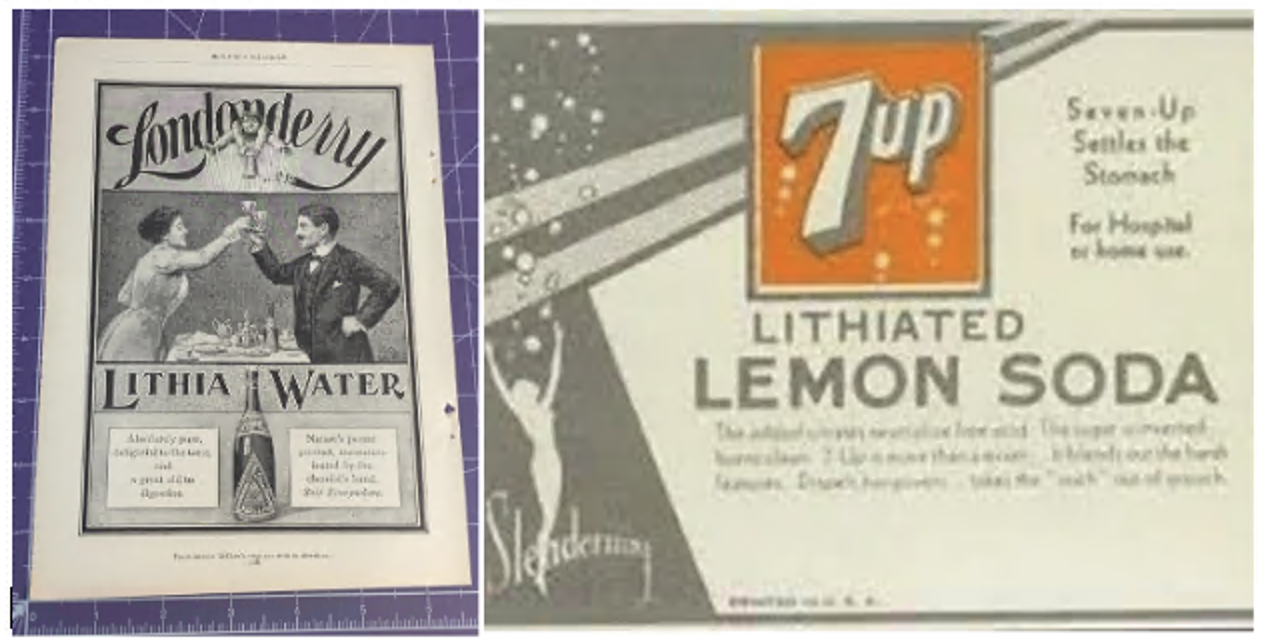
Lithium has a long therapeutic history, from its use to treat gout (Garrod 1859), mania (Hammond 1871), and depression (Lange 1886) in the mid-to-late 1800s; its commercial use in the early 1900s [Lithia water, Lithia Beer, and 7 Up, invented by Charles Leiper Grigg in 1929]; its rediscovery by John Cade in 1949 for the treatment of mania (Cade 1949); to its introduction for the management of bipolar disorder in the 1970s (Schou 1983). Aron et al. proposed lithium orotate as a potential therapeutic agent for Alzheimer’s disease in 2025 (Aron et al. 2025). Lithium exerts its effect by competing with magnesium for specific phosphatases and kinases (Dudev and Lim 2011). The relationship between lithium and magnesium is of particular interest in the context of stress-induced magnesium deficiency associated with dolichol pathway dysfunction (Schloss 2025).
Linking lithium-magnesium regulation of glycosylation with stress-induced magnesium deficiency (Schloss 2025) explains the diverse pharmacology of lithium for dementia (Weckstein et al. 2026), osteoporosis (Lee et al. 2026), cancer (Luo et al. 2025), and longevity (telomere extension) (Zarse et al. 2011; Sakrajda and Rybakowski 2025). More than 50% of all proteins, including key enzymes and signaling proteins, require glycosylation (Gil et al. 2010; Mengyuan et al. 2024). Multiple stress-induced nutritional deficiencies (MND) of key cofactors required by enzymes of the dolichol pathway for protein glycosylation increase the risk for Alzheimer’s disease (Schloss 2025). One mechanism by which lithium can overcome glycosylation dysfunction due to stress-induced magnesium deficiency depends on stimulation of b-catenin binding to the TCF/LEF promoter of the DPAGT1 gene (Sengupta et al. 2010). Upregulation of DPAGT1 transcription compensates, in part, for the reduced magnesium-dependent function of this essential link between N– and O-glycosylation, restoring N-glycosylation required for mental health and collagen-dependent processes, such as bone mineralization and wound healing. Consolidation of long-term memories requires N-glycosylation (Inaba et al., 2016). Brain inflammation due to the unfolded protein response (UPR), amyloid plaques, and hyperphosphorylated tau, all hallmarks of Alzheimer’s disease, contribute to dysfunction of N-glycosylation in the brain (Schloss 2025). Lithium helps offset the consequences of magnesium deficiency, due to diet or stress, by increasing transcription of the magnesium-dependent enzyme DPAGT1, which links N– and O-glycosylation, in addition to other enzymes essential to the dolichol phosphate pathway and N-glycosylation.
Research on the pharmacology of lithium by AUHS Doctor of Pharmacy student Teresa Nguyen and Professor John Schloss led to a publication in the respected journal Inflammopharmacology. This research paper provides a detailed mechanistic explanation for the diverse pharmacology of lithium and the pathology of nutritional deficiencies caused by psychological and physiological stress:
Schloss, J.V., Nguyen, T. The lithium-magnesium-zinc axis under stress: regulation of N-glycosylation-linked proteostasis and Alzheimer’s disease. Inflammopharmacol (2026).
Link: https://doi.org/10.1007/s10787-026-02383-3
This work on stress-induced nutritional deficiencies and their effects on mental health, longevity, and a wide range of other health issues is of special interest to AUHS, the AUHS Foundation, and our collective mission to serve the underprivileged and homeless. Homeless populations, especially homeless veterans and minority groups, are more likely to suffer from stress- and nutritionally-related diseases (Panenka et al. 2024; Taylor and Sharpe 2008; Pelham-Burn et al. 2014; Hollywood 2023; Schloss 2025).
References
Aron L, Ngian ZK, Qiu C, Choi J, Liang M, Drake DM, Hamplova SE, Lacey EK, Roche P, Yuan M, Hazaveh SS, Lee EA, Bennett DA, Yankner BA (2025). Lithium deficiency and the onset of Alzheimer’s disease. Nature 645(8081):712–721. https://doi.org/10.1038/s41586-025-09335-x
Cade, J.F. (1949) Lithium Salts in the Treatment of Psychotic Excitement. Med J Aust 2(10):349–52. https://10.1080/j.1440-1614.1999.06241.x
Dudev T, Lim C (2011). Competition between Li+ and Mg2+ in metalloproteins. Implications for lithium therapy. J Am Chem Soc 133(24):9506–15. https://doi.org/10.1021/ja201985s
Garrod, A. The Nature and Treatment of Gout, and Rheumatic Gout; Walton & Maberly: London, UK, 1859.
Gill DJ, Clausen H, Bard F (2010). Location, location, location: New insights into O-GalNAc protein glycosylation. Trends in Cell Biology 21(3):149-158. https://doi.org/10.1016/j.tcb.2010.11.004
Hammond, WA. A Treatise on diseases of the nervous system; D. Appleton and company: New York, 1871.
Hollywood JB (2023) Integrative therapies for magnesium and calcium deficiency in a food insecure, autism subject: a case report. Integr Med (Encinitas) 22(4):28-32. PMCID: PMC10519233
Inaba H, Kai D, Kida S (2016) N-glycosylation in the hippocampus is required for the consolidation and reconsolidation of contextual fear memory. Neurobiol Learn Mem 135:57-65. https://doi.org/10.1016/j.nlm.2016.06.018
Lange, CG. Om Periodiske Depressionstilstande Og Deres Patogenese [On Periodical Depressions and Their Pathogenesis]: Foredrag Holdt i Medicinsk Selskab den 19. Januar 1886, Med en Efterskrift; Jacob Lunds Forlag: Copenhagen, Denmark, 1886.
Lee JW, Hasegawa T, Ikedo A, Mizuno K, Amizuka N, Kong SW (2026). Lithium and the Brain-Bone Axis: A Bridge between Osteoporosis and Alzheimer’s Disease. Curr Osteoporos Rep 24(1):7. https://doi.org/10.1007/s11914-026-00954-5
Luo J, Zheng L, Jin Z, Yang Y, Krakowka WI, Hong E, Lombard M, Ayotte J, Ahsan H, Pinto JM, Aschebrook-Kilfoy B (2025). Cancer Risk and Estimated Lithium Exposure in Drinking Groundwater in the US. JAMA Netw Open 8(2):e2460854. https://doi.org/10.1001/jamanetworkopen.2024.60854
Mengyuan He, Xiangxiang Zhou & Xin Wang (2024). Glycosylation: mechanisms, biological functions and clinical implications. Signal Transduct Target Ther 9(1):194. (2024). https://doi.org/10.1038/s41392-024-01886-1
Panenka WJ, Thornton AE, Stubbs JL (2024) The connection between homelessness and dementia. Lancet Public Health 9(4):e212-e213. https://doi.org/10.1016/S2468-2667(24)00044-6
Pelhan-Burn SE, Frost CJ, Russell JM, Barker ME (2014) Improving the nutritional quality of charitable meals for homeless and vulnerable adults. A case study of food provision by a food aid organization in the UK. Appetite 82:131-7. https://doi.org/10.1016/j.appet.2014.07.011
Sakrajda K, Rybakowski JK (2025). The Mechanisms of Lithium Action: The Old and New Findings. Pharmaceuticals (Basel) 18(4):467. https://doi.org/10.3390/ph18040467
Schloss JV (2025). Is dolichol pathway dysfunction a significant factor in Alzheimer’s disease? Inflammopharmacology 33(8):4651–4658. https://doi.org/10.1007/s10787-025-01868-x
Schou M (1983). Lithium perspectives. Neuropsychobiology 10(1):7-12. https://doi.org/10.1159/000117977
Sengupta PK, Bouchie MP, Kukuruzinska MA (2010) N-glycosylation gene DPAGT1 is a target of the Wnt/b-catenin signaling pathway. J Biol Chem 285(41):31164–31173. https://doi.org/10.1074/jbc.M110.149195
Taylor KM, Sharpe L (2008) Trauma and post-traumatic stress disorder among homeless adults in Sydney. Aust N Z J Psychiatry 42(3):206-13. https://doi.org/1080/00048670701827218
Weckstein AR, Carr S, Wang P, Krüger N, Goodarz Danaei, Schneeweiss S, Desai RJ (2026)
Lithium therapy and delayed progression of Alzheimer’s disease and related dementias in patients with bipolar disorder and mild neurocognitive disorders. medRxiv [Preprint]. Jan 13:2026.01.12.26343472. https://doi.org/10.64898/2026.01.12.26343472
Zarse K, Terao T, Tian J, Iwata N, Ishii N, Ristow M (2011). Low-dose lithium uptake promotes longevity in humans and metazoans. Eur J Nutr 50(5):387–9. https://doi.org/10.1007/s00394-011-0171-x